





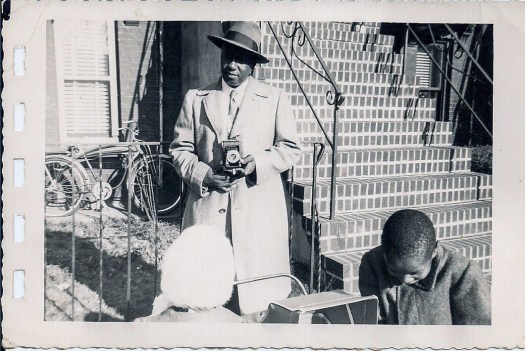
 I was fortunate enough to have had my father in my life for a little more than fifty years. My Dad was the kind of father who would get down on the floor to play with his kids. He did Cossack dances around the house, sang sad and silly songs, told really funny and really corny jokes, brought us bubble gum at the end of his work week, and played rag time piano. He struggled with us (certainly me) through math classes, taught us all to play poker, box, and skip rope. He taught my sister and me to waltz, and retained Victorian-like, romantic ideas and attitudes of courtliness and honor.
 When considering student debt, people seem not to understand that the average person starting graduate school is a nearly 40 year old woman. There are far fewer grants for grad school than scholarships for undergrads, so most people take out loans. In fact, even in colleges now, “student aid packages” are predominantly based on loans unlike any others. They cannot be claimed in bankruptcy proceedings and the current administration has almost completely eliminated debt forgiveness proceedings for teachers and other public servants who were eligible for debt release after ten years of service and payments.



 Disappointment can’t make you turn away, it requires us to use every tool available to us until “revolution” evolves.
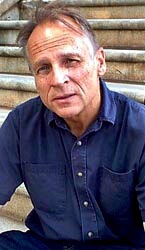
Hi Linda Porter Gracie
I hope you were able to see what Edy Marie Gonzalez wrote in response to your query on my Facebook page about Roy Wagner. It was lovely and true.
Roy was one of those larger than life characters, but not in the usual way. There was no bombast and neither his brilliance nor his kindness nor his absolute craziness hit you in the face. He loved Coyote medicine, but never cruelty.
The first time I remember talking with him was at some UVA presentation. I’d just arrived, fresh out of Philosophy, and suitably arrogant towards my new, seemingly theory-poor discipline. I questioned the speaker (Roy) on a nuanced point regarding category boundaries, as the other first term grad students looked at me in shock. I expected to be rebuffed by The Great Man and was ready to argue. Instead he seemed interested and asked where he might learn more about the subject. I was awed by the humility of his true intellectualism. He was curious and patient in ways that too few academics are.
When he discovered that I knew about Santeria and had spent two years with a brujo, we became best friends. He helped me transition into anthropology (with the Roy Wagner twist) and was, for a time, my dissertation advisor and remained on my committee, asking the final and most Roy-like question at the end: “And how would you explain all of this in terms of quantum physics?” I’ve no doubt that it made for one of the most unique dissertation defenses of anthropology in UVA history.
He was also Pontius Pilate in the on-going, ever changing production of Jesus Christ Superstar that my friends and I (Joseph Hellweg, Indra Davis, Sarah Boone, Raymond Cruz et. al) practiced at my King St. house for semesters on end. Roy did not have a great singing voice, but he regally embodied the part, displaying his usual good humor and a flare for drama and what can only be categorized as Vogueing.
Roy was among the most talkative people I’ve ever met and there were no trivial conversations. When you entered his office, hung out at Edie Turner’s house, or spoke on the phone, you had to be prepared to devote time to enter what I called Roy World. It was a place of vast imagination, a library’s worth of knowledge, anecdotes galore, recognizably Chicagoan anthropology, a plasticity similar to that that Bob Zimmerman applauded in me back at Sarah Lawrence, but with a more extensive range of knowledge in many areas. It was a place of stimulation and joy and exhaustion, fortified for him by vast quantities of unbelievably strong coffee.
I returned from my first field trip among healers and independent coffee growers in Puerto Rico with a pound of the best coffee on the island for him. Roy was delighted and immediately poured the entire bag into his small (4 cup?) coffee maker, for one intense batch that he delightedly consumed within the hour.
Roy was soft spoken and intense. He loved music, wit, and animals. He was kind but never condescending to children, unfailingly gallant, fun, and could be bitingly sharp, but only with his peers. He was protective of students and underdogs and he talked to everyone as an equal. My husband- an outsider to the academy- has fond memories of schmoozing with Roy, who of course made it his business to casually ensure that Raymond was included and comfortable.
He was a wonderful story teller and mischievous teller of truths. He could render what must have been painful aspects of his life into gently humorous yet still touching stories.
Roy was special. He would send me chapters of a book he was working on but he almost never wanted to discuss the actual typewritten pages, but rather, the concepts and sets of a priori beliefs from which they were constructed. He loved that I’d been a Wittgensteinian philosopher and could follow and add to his journeys into language games and meanings.
He was playful, delightful, and easily delighted, and thus always had an aura of youthfulness. We danced & sang together, watched tv, had meals, and did all the superficially mundane things that friends do (we once went to the mall!) but that’s not where the heart of our bond was centered.
It’s impossible to say who Roy was, and is, to me. He was among the few who made being the first African American and first older student in grad anthro at UVA doable. His book, The Invention of Culture is still read, with good reason. At heart, Roy was the embodiment of intelligence. Ever curious, mind as sharp as a razor, willing to appear foolish in pursuit of ideas. He was Diogenes-like in his quest for the truth of understanding.
I trusted Roy and Roy could be trusted. I can’t say that of many people. He was always himself: always and in all ways. Roy will always have a place in my heart and I’ll be very interested in hearing about his adventures if we again meet up in some form or fashion. I certainly hope so. In the meantime, as I said before, I like to think that Roy and Edie are regaling the other Ancestors with great stories and questions and that there’s an endless supply of good coffee for Roy. Form may change, but The Journey never ends.
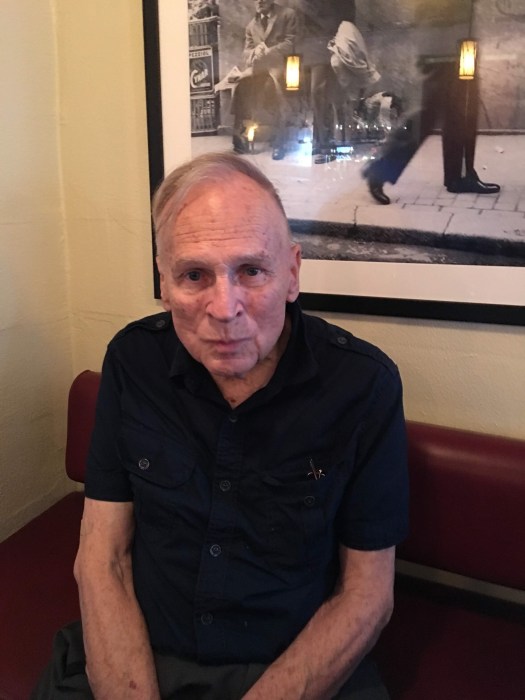
Photo by Konchog Pema (Ramanan Schultz) for me, at Roy’s request.

SMH at white people mourning and moaning about Portland, a historically and currently racist city in a state that was pretty much developed as a center of white supremacy and separateness, in a country built on the attempted genocide and ethnocide of its Original People and the people enslaved to replace them.
White denial is astounding! “Stronger than dirt” or any known adhesive; longer lasting than Willie Wonka’s gobstopper; 100,000,000,000 times deeper than the Mariana Trench; more destructive than whatever killed off the dinosaurs.
Diagnosis is the first step towards treatment and healing. Denial doesn’t just prevent that process, it actively destroys its host and everything around it. It kills us all: soul, body, earth. Whiteness isn’t merely about your melanin levels, it’s a political choice that has real world ramifications. As with denial, help is available to those who seek it.
So wake up- it’s late and even Scotty canna hold ‘er any longer.

“I historically know much more about you than you will ever be able to dare to imagine about me. I did not invent you. I did not write ‘Gone With The Wind.’ You invented me. And you live with that invention. I don’t. I had to know what you REALLY think about me. You act it out every hour of every day what you REALLY think about me. Every institution in this country is based on what you think about me. There’s not a single institution that you have invented that’s not a racist institution. Not one. From the church to the unions. To say nothing of the insurance companies, to say nothing of the way you think you run the world. I know what you think about me. You don’t know… You don’t WANT to know… what I think about you.”
~ James Baldwin, in a 1987 CBS Interview
 shamamaspeaks