How Dolly Parton Entered My Playlist

In James L. McPherson’s 1978 Pulitzer winning book, Elbow Room, his very first story struck a chord with me. Why I Like Country Music” reads like a letter to his wife, who doesn’t quite understand why a Black man enjoys square dancing and country music, both almost completely associated not only with whiteness, but whiteness often tied to racism, sexism, and violence.

Like McPherson, I grew up hearing country, and we all had to learn square dancing in gym classes at school. Country was just another of the multiple genres I was exposed to as a kid at home. My music loving parents ignored boundaries and had old 16s, 78s, 33s, and 45s of any musician or band that caught their fancy. My mother had grown up in North Carolina, and in her youth, there were no Black radio stations, so it was country, European classical, and maybe some jazz. She heard local blues singers, had Native American family who sang traditional music, and knew genres and songs associated with Appalachia. My parents favored Big Band music and they’d occasionally go into Manhattan if Ella, Duke, Basie, or Goodman was in town, but there were no limits on what was enjoyed. I grew up knowing that, as in every other genre of music in America, Black (then Negro) artists had started or contributed to it. Mom was very happy when Charlie Pride became popular, and we watched the Patsy Cline show, and Tennessee Ernie Ford every week. I was convinced as a little kid that Patsy was somehow related to my mom, as she resembled mom’s sisters and seemed to have a bit of soul in her voice. Johnny Cash was a big favorite, a trifecta of mom’s approval: he marched for Civil Rights, Native American Rights, and had a great voice.

Pop dug Hank Williams and enjoyed and was amused by his plaintive voice, mimicking him in his own tenor. Through his job in first the Bayway, and later Linden Standard Oil refineries, he was friendly with workers from a number of  nationalities and cultures, and would come home with songs or foods that weren’t common in our neighborhood back then.

My dad was also a fun dad who loved dance and every form of entertainment around. Athletic into his eighties, he would often tap dance or get down and do a Russian Cossack dance through the house. It was he who taught me to waltz and a version of the minuet. Weekends were full of music and singing, and the Big Band records would come out, but there was also a lot of opera and orchestral music. Through my mom, I knew who The Weavers, Odetta, and Pete Seeger were, as well as the those we boycotted because they were racists or had “named names” during the infamous McCarthy era.

Paul Robeson and Marian Anderson were as close to saintliness in our house as MLK, while other popular actors or musicians were avoided, if not banned. While we were allowed to watch Ivanhoe on tv, we knew that Robert Taylor wasn’t a good guy, as sure as we knew that the Santaesque Burl Ives testified against colleagues. My parents wouldn’t purchase their music or pay to see their films, and we were aware of the gaps between entertainment and reality. Even as kids, our First Amendment rights were never denied, but no one was above critique or reality checks, and ratting out others to groups like McCarthy’s was considered no different than informing on neighbors to local thugs.

All of this matters and might explain the special place that Dolly Parton holds in my story. In 1971, I was still living at home, a year after graduating high school. I was working as a switchboard operator at Ma Bell, figuring out next moves after turning away from my planned career as a concert pianist, and refusing the offer to go to our local Jersey City State College. I was not in my mother’s good graces, but our bond was always deep, even when we struggled to understand each other.

I remember one day coming in through the upstairs door, entering the kitchen to say hi, knowing Mom would be there, cooking or setting up for dinner. The late afternoon sun was behind her as she sat in her usual spot at what was in my mind the head of the table, nearest the stove. Daddy always sat right beside her, with Richard across from him when he was home, and me across from Mom, nearest the fridge for reaching any last minute ingredients or condiments.

She had clearly been waiting for me and she had the special look her nearly black eyes got when she had something to share with me. My mother was a nerd who seldom got to indulge her intellectual forays with an appreciative audience during the week. Five kids, husband, and job left little time for hanging out with friends who might share her love of history and politics. I also doubt that most were as well or widely read as she, so we were natural allies in our enthusiasm for things beyond the mundane, prioritized as those might have to be.

I kissed her on the cheek and made myself comfortable, when she said she wanted me to hear something. It turned out to be a country song by a woman with a warbling but strong, distinctive soprano. As I listened to the distinctly Appalachian accent sing about being poor and being teased about a coat her mother had lovingly made to protect her from the mountain winter cold, I remember being both surprised yet completely understanding why my mother wanted me to listen. She didn’t have the voice of my mom’s usual faves, but the Biblical reference, the child/underdog, the love: all subjects important to the woman watching my face for reactions.

“Who is she?” I asked. A slight confusion over why this particular person and song moved my mother must’ve shown, and my mother proceeded to parse the story and its implications in a way that would shame the most noted music critics of the time.

She talked about her early childhood in Fayetteville, where folks from the mountains came down for work. She talked about the Thirties, the Dustbowl, and knowing people with little food, and clothes worn till they fell apart. She talked about the evils of snobbery and class, but mostly she talked about the love shown, mother to daughter, in the making and wearing of that raggedy coat, and the understanding that those who are blessed often come disguised as the poor, lame, or otherwise socially unaccepted. She briefly quoted the Beatitudes, her piercing eyes looking straight into mine to be sure that the lesson went straight into my heart, as though she hadn’t been posting it there for my entire young life.

Dolly became a favorite and if she was appearing on tv, she was watched. I questioned her appearance and understood it as drag, but her early appearances didn’t presage the powerhouse activist she’d become in a few short years. I’m sure many of her early fans were amazed as her popularity and wealth grew to find that she meant everything she ever said about the centrality of the generous, loving spirit of Jesus and her mama in her life. Her music got better and better as she sang to help farmers, support breast cancer research, and most completely, children and literacy. She was a funny saint: self deprecating, silly, a protective spirit in a world where assaults on human bodies, dignity, and cultures seen as poor or lesser. Through it all, she showered the people with love, good music, and the tools to improve their lives.

I would later introduce my salsa and soul focused husband to the joys of Dolly, and he particularly enjoyed her duets with Kenny Rogers in the 80s. I made sure he understood Coat of Many Colors. Even though I knew it would never be a type of music he’d embrace, I knew he’d love the story and deep bond of mother and child, as well as what it meant to me. And while it’s far from my favorite Dolly song, as she does in the first lines, it always takes me back to the warmth of home, my mother’s love and friendship, and the values that will I form me until the day I die.

Thank you, Dolly Parton. I’ll be listening for your very special voice in the heavenly chorus. My mom picked a winner.

Anjana Mebane-Cruz

August 26, 2026


RESENTMENT

I’m big on people feeling their feelings and acknowledging their emotions. For many reasons, that’s not always easy in our type of society. Every culture teaches the young what’s considered to be acceptable behaviors, and by those behaviors, what can be considered acceptable and unacceptable feelings. Relatively few societies teach the nuances between how one behaves as opposed to how one might feel and validates the feelings despite requesting a different public behavior.

Only recently in the US have parents and teachers begun to teach children about self regulation and understanding themselves as both social and private beings with complex feelings sometimes requiring social modification.

I was explaining this to my own child over forty years ago, telling him that he was entitled to his feelings. I suggested that during an argument with parents, he might be unable to fully express himself, and we might be unable to fully hear what he was saying. I talked to him about power differentials and suggested that he should go to his room and write down his feelings. Importantly, he should consider his argument and write down his points. I could not speak for his father, but I promised that when we were more calm, I would listen to his points and take them seriously, and freely admit it if he proved me wrong.

I wanted him to understand how systems of power/authority work, to understand where he stood in relationship to power, to understand his own feelings and always know that he had the right to feel however he did, and finally, to learn how to make a coherent, logical, fact based argument, and how to present it to any authority figure. I wanted him to understand that even in the face of authority or power, he was never helpless or powerless: that his feelings were important, and that modulation did not mean suppression.

Consequently, little dude kicked my ass after a later argument, and he did it with irrefutable proof of my unfair behavior. I was chastened and also as proud as if he had argued against the Supreme Court and won!

Now, this is a long way to the point I want to make, which is about one specific “emotion”: resentment.

In my opinion, it is the one unacceptable emotion. I don’t even consider it to be an emotion, because unlike anger or joy or hurt, resentment is bred. It is, like some forms of depression, born from suppressed anger. Unlike depression, resentment is anger combined with or wed to a sense of entitlement. Unlike simple depression, resentment is not turned inward even though it lurks under cover. It seethes and is aimed at the person considered to have perpetrated a wrong against you. It is an ugly, roiling mixture that spills over into relationships and spoils or even kills them. It is- again, in my opinion- the anger of cowards. It is never justified. I repeat: resentment is never justified.

I say that having recently spent time with someone who holds deep resentments for ill treatment in the distant past, and easily falls into it now. This is a person who never raises their voice, is controlled and controlling, while always wanting to appear to be reasonable and 1950s Americana “nice.” Meanwhile, they are a whiny, angry mass of unacknowledged feelings with a list of accumulated “wrongs” against them. My suggestion that it would be better to have a clean and clearing argument was immediately shut down and probably added to the resentment.

This person is attractive, a rather brilliant and accomplished scientist, musical, and a good cook, among their many accomplishments and personally lovely traits. Yet they only heard criticisms and felt them far more deeply than they were delivered. It was perplexing to me because my own relationships depend on honesty and clear communication between each person. We commit to always speaking our truth and to always figuring out how to work through our differences, hurts, or anger.

I don’t let many people into my world, but I depend on those in it to love me enough to keep me honest. I know these folks love me and have my back, so when they “pull my coat” to tell me I’m off the wall, or wrong about something, I take it seriously and listen, and we talk. This is the pattern with close friends, family, and my late husband. I don’t understand how you can have real intimacy if you can’t talk about anything and everything truthfully, even if it’s painful to say or hear.

Which means you have to figure out rules for difficult conversations and arguments. My people and I use safe words/phrases. Going back to that conversation with my then seven year old, we agreed on a phrase that indicated things were too heated and that we must each back off and cool down before resuming. In my life with my husband, we had similar cues. When my friends or I am going through rough periods, when we call, we use the phrase from Marathon Man: “Is it safe?”

They can then say if they’re up for conversation or not, but it also always makes us laugh and lightens the moment before going any further. What works has to be negotiable and agreed upon, as well as respected by all concerned.

It was important that in all cases, we made note of our feelings and the points we wanted to make. We also made the commitment to really hear, not just sit quietly, when the other person stated their case. To take it in and take an honest, even hard look at ourselves and our part in the problem. To take responsibility and not only apologize if wrong, but to figure out how to avoid repeating the behavior(s) and to be more aware of how what we do or say impacts others. Not to repress ourselves, but to put our creativity into finding healthier ways to express ourselves. To recognize that might sometimes require outside assistance/therapy, and to value ourselves and our loved ones enough to do the work.

I don’t use the terms “friend” or “love” lightly. If I consider you a friend, my bond is one of family. To the best of my ability, I will have your back. I will listen and share your joys and sadness. I won’t let you go outside with a boogey hanging from your nose or wearing an unflattering outfit unless you’re in disguise. If it was a righteous murder, I’m your alibi (hahaha).

Yeah, I’m that sister, and I expect the same in return, whether you’re my lover or a regular friend. I’m not a casual kind of person, and there are few things that will lead me to abandon a friendship/loved one once I make that commitment. Even after a major blow out, when any trauma has receded, I will always attempt to talk and reconcile our differences unless I decide that the relationship is harmful to me or my family in some way that is insurmountable. The only two close relationships I’ve ever had with people that couldn’t be bridged, was with people who hoarded their resentments at the expense of love. It was heartbreaking to watch people I loved risk or wreck their relationships with others, not only me. Because I do consider that maybe I was the asshole in those cases. Certainly I know I contributed in the first one, because I didn’t then understand the shame and guilt my friend harbored from childhood abuses.

In the second, my lover was unable to be honest or discuss emotions as equals. They did not trust the depth of my feelings or commitment as they had never experienced that kind of relationship. But more pointedly, from childhood, they had never felt that they could speak out when they were treated unfairly. They had never learned the emotional or communication skills they needed and they were unwilling to do so, even as a mature and safe adult. The deeper mistrust was in themselves and their fear of being misused or taken advantage of: their lack of trust in themself.

I saw this respected elder behave in the most petty ways I’d ever experienced in another being, even as a teen nor by any gender. That, more than anything, took me aback and made me want to understand the gap between my perception of this soul and the self perception and insecurities that propelled them through life.

I guess in the course of seven decades, I’ve had a pretty good track record in maintaining freindships, but it’s still sad to have lost any friends you genuinely loved.

So yeah: resentment is a useless set of emotions. A “weapon of the weak.” to paraphrase James Scott. Be brave, people: speak your truth, and trust yourself and your loved ones to do so. The people who love you already do, and they probably already know how you feel. If they don’t, do them the honor of sharing yourself with them. Anger has a place in the pantheon of emotions. If you’re hurt or angry or both, it’s important to express those honest emotions. Resentment is dishonesty: it’s hurt and anger in an ugly disguise and it can cost you the best relationships you might have had.

“Be brave and mighty forces will come to your aid..” Goethe

“(re)VISION: Through Fracture, Focus. Through Vision, Freedom.”


5/24/2026

A quick shoutout to those of you who get my sense of humor, but also know how very serious I am in pretty much everything. I have never wished to be anyone else, not even as a young person, and I will never be without passion, in love, work, or play. 

This is me: dig it, or ditch, but never try to flatten me out for your ego. I don’t want to “fit” inside your little world. I am the Empress of the Universe, now and forever more.

And as my birthday gift to you, here is a poem by the amazing Maria Hamilton Abegunde that was partially inspired by, and dedicated to me:

This poem is for Iya Dr. Anjana Mebane (Meh!Ben)-Cruz, now retired, who was the first “Afra-Amer-Indian” woman to receive a Ph.D. in Anthropology at University of Virginia for her ground-breaking research on people of Native and African American ancestry. 

The poem’s first line is from her, after a conversation we had one day about our current political, social, and historical moment.

When I called her to read the poem as a surprise, she shared with me how her elders – Native American and pan-African – told her as a child she was a Star, and that we, Africans, came from the stars.


“(re)VISION: Through Fracture, Focus. Through Vision, Freedom.

Part 1

We have been here before:

The death of Empires that resist

Our Brilliance

​​Beauty

​​​Being

​​​​Black.

Their resistance means

the world will break.

Not because we fight,

Or because we “told you so”.

No, the world will break because 

bit-by-bit even the Dark knows the truth:

The Moon depends on the Sun to be seen.

The death of a Star births new Worlds.


Part 2

Yes, it is true: Stars breathe.

They pulsate, gather every molecule 

they can before their final exhale explodes

into helium, carbon, calcium, and iron –

Food for an expanding universe.


That starlight in the sky you see

Is already 50,000 years old.

You cannot stop a Star from shining. 

Even after its death, you cannot unsee

A Star’s only purpose: to be free.


But, did you know?

Empires are Cannibal Galaxies

Incapable of understanding why Stars 

Do not consume each other. 

Unlike Empires, when Stars die, 

They release all their energy to feed whole worlds.

They gather to witness their own re/birthing 

into something unknown.

As they are becoming they never forget who they are.


Part 3

We are the Stars.

We are the light that emanates from their rays

We are the rays that are vibrations

That turn into sound

And we are the sound

That hums life into being.


Cannibal Galaxies would rather die

Than admit that they need us, want us,

for how we know what we know.

This scares them.

And, we know that type of fear

Leads to insatiable lust for universes.


Empires will never tell us that they regret choosing

Dorian Gray’s Mirror, and that is why they

Gaze at us with such hunger.

Their own image reminds them

That rot begins at the core.


Part 4

On the other hand,

“We Who Believe in Freedom”

Have chosen Osun’s Mirror.

And, in the Great Mother’s view we see

This truth: 

We are memory keepers. 

We cannot die.


We  know how this story ends.

We have seen the future because we are living it

And because you will live the future 

That is not ours to dream.

Our choices have always been to “Be like Water”.

That is, we choose to love all forms of life

In their changing same

Multi-dimensionalities, textures, and tones.


Part 5

How the story could have gone.

Could go still.

Stars fall to Earth 

And decide to stay.

We fall in love with our own magnificence.


We love us:

Something in the way we move,

Something in the way our photo-spheres reflect

The truth of who we are:

Imperfect plasmas who survived

Gravitational collapse

And breaches in time and space

That will never be sutured.


We love each other so much,

That we agree to never leave each other alone, or empty.

We know that the Cosmos is larger than any galaxy.

And, so we choose, every moment to expand

Until the only thing of us that remains

is Breath


I Yam What I Yam

Lately, I wonder how I appear to people. It seems that they often see someone I am not, even though I have always been pretty forthright and honest about myself. I’ve never claimed to be easygoing or sweet, although I certainly have my moments. Generous, yes, affectionate, yes. Patient? Absolutely not, though tons better than in the past. Superficial- nah! I go deep or I don’t go at all.

I studied to be a concert pianist and performed at a number of venues. As a kid, I seriously thought I was an incarnation of Ludwig Van Beethoven. My first experience of live opera led to Vissi D’Arte, Vissi D’Amor becoming my motto and guide for life, so can I be dramatic? Yes, at times.

I believe that life is meant to be more full than most people experience, and I don’t mean just travels or romances- I mean depth. We are meant to know ourselves, our connection to Earth and everything and everyone in the natural world, and most importantly, we are meant to feel our feelings and understand what they mean. To balance heart and mind so that you live fully, knowing when to analyze and when to simply feel.

I think this is the only way we can connect deeply with others and the only road to true intimacy and the sublime joy that such connections can bring.

I understand that many people (most Americans?) do not share these beliefs. That most people want the surface waters, with as few ripples as possible, and no chance of drowning. I’ve had a hard enough life to understand that desire, but I know it’s not really possible in this world without walling yourself in, physically and psychologically, and for me, that’s far less appealing than actual death. It’s what an Albanian friend once called “Flat world.” The colour and flavor and nourishment all removed in favor of odorless, uniform pap. It’s a il/delusion that leads not only to constant self-disappointment/dissatisfaction, but the false sense of “deservedness” and a dangerous belief in elitism that leads to systems of favoritism and oppression.

So, given my clarity about who I am and what I’m about, how is it that men seem genuinely surprised when, as Popeye would say- “I yam what what I yam and that’s all what I yam!” That I am comfortable in myself, know and make clear my limits and boundaries. I try never to be deceitful or hurtful, although I sometimes fail with the latter. I openly ask for their boundaries and try to be respectful of them, if I know what they are. It’s interesting to me that although they like to think of themselves as direct and less emotional, many men are unable to answer direct questions, and instead, seethe and become resentful rather than confront or explore the emotions that they do have and communicate honestly with their partner. They don’t understand that they lessen their own humanity by denying the reality that as humans, we are “emotional cucumbers,” as a popular meme described it. Sadly, too few seem to understand that an adherence to performed strength actually weakens the performer.

I am loyal and faithful: the original ride or die woman. I expect the same from a partner. I don’t need fish or other dead animals that gents seem so found of posting. I live in a small city, but we do have markets, and in a pinch, I can do those things, plus also know which plants are edible. I also know how to shear a sheep, spin the wool into yarn and weave it into cloth.

I like jewelry, but need none. At the moment, I’m carrying two mortgages, and although it’s been a burden soon to be shed, I manage and do so without assistance. So while it would be lovely to be with someone who can and would want to make my life materially more comfortable, I don’t need that from a man.

What I do need is to be seen and loved for who I am, not who you wish me to be. I had thirty seven years with a strong man who adored me, was patient with my ridiculousness, and thought I could do absolutely anything. He and my son inspired me to persevere and go beyond my own boundaries. Love inspires.

When there is love, we tend to grow towards each other but without ever forsaking our own sense of self and autonomy. Love makes us want to be our better selves and to make our partners proud as well as happy, but it doesn’t coerce. It accepts our limitations even as it inspires us to go beyond those limits. It’s good damned stuff, and if you’re lucky enough to have or find it, don’t hold back, people: jump in and know that it will safely buoy you as you learn to navigate its depths.

Yet in still, men look at me and see someone who’ll humor their egos (I generally won’t); lie to make myself fit into their world (I definitely won’t); and will concede to them even when I know more: hah! (“It is to laugh!”)

They somehow seem to see a simple minded, sexy, and easily manipulated woman, and I don’t know what that’s about. I accept that it’s some kind of projection-fantasy, but there are better candidates for the role than I, so I don’t understand the anger when I turn out to be exactly who I said I am. Dudes!

I am fiercely introspective and introverted, curmudgeonly, and also charming and downright adorable. I will cook, bake, write poetry, and sing to you, but only when I feel like it or when you need it. We all need special attention at times and I consider it my job to notice, but also encourage you to simply state your needs and desires. The same treatment I expect back from a mate. We take care of each other, with love. We should genuinely enjoy each other’s company. Anything else can only lead to sadness and discontent. Friends and lovers- it’s a real thing that happens, believe me.

So that’s all I have to say about that. I’d’ve thought that at this age, the fellas would understand more and would’ve accepted what women are, but apparently the delusions remain. And that’s a shame, because we are meant to balance each other and enjoy the hell out of each other, heart, body, and soul. Communion, y’all: adageyudi/gadugi.

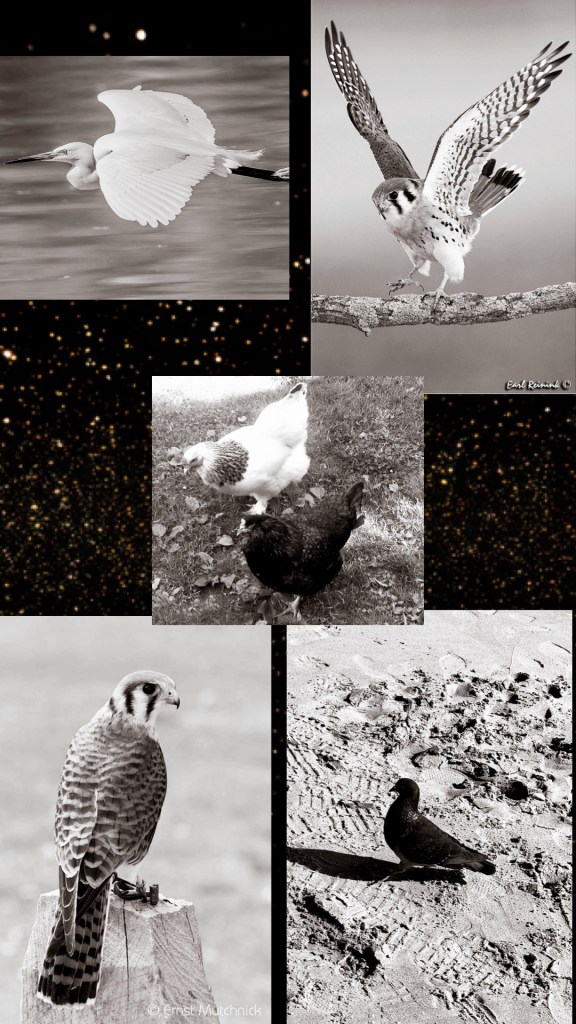
Happy Bird Day!

Today is the official, annual, and original Bird Day on May 4th (established 1894) for conservation, so pick up your binoculars, go quietly to the woods or your back yard or park, and marvel at the beauty and wondrous flight of our avian friends.

I’ll be heading to my local preserve in the afternoon, when the vultures circle so beautifully before doing their sacred work. Maybe I’ll get to see a mocking bird keep a hawk away from her nest, or a robin playing games with a squirrel. Or maybe it’ll be the usual array of crows laughing and making fun of everything I do. All sightings are joyously welcome to me and close to my heart.

Git on out there, people: they are kin.❤️

Another “Don’t Know Why He’s On My Mind Today” Moment:


Old Time New Yorkers, did any of you know Rich Bartee, the D Train Poet? I hadn’t thought about him much since I learned of his passing, in 2003, but I’m now writing a short piece about him in my memoir, because today he came to mind, pulled up a chair, and stayed until I remembered our many little meetings and conversations.

After an interesting first meeting, we were casual buds for many years when I’d run I’d to him in the Village or Soho. We’d occasionally have a snack or lunch and talk, mostly about his life, or local art/artists, city politics, and community goings on. We knew many of the same people from poetry haunts and music, shared a certain sense of humor and desire for justice.

The first time I met him, he panhandled me in the West Village. After looking him over, I asked if he was hungry and to his great surprise, offered to buy him a meal. I was about ten years his junior, and pretty sheltered, and it was the first time I’d ever made such an offer, but I somehow knew he was not only safe, but like the brothers I’d grown up with who would look out for you when needed.

That conversation at the old Empire Diner, was the first of many over a couple of decades of unplanned meetings, generally between the Village and Soho. I remember my surprise and confusion when he told me he’d been a police officer upstate, among other unexpected paths on his journey. He’d refused to obey what he thought was an immoral order, and paid heavily for his “insubordination.” He also had scars on his skull where he himself had been beaten by police at another time. Perhaps it was his travails that gave him the aura of empathy I felt, and fueled his desire to interact more deeply than with the usual superficialities with others along his path.
He also talked a bit about what sounded like regrets, but I don’t think he would have couched his feelings in those terms. He presented his story as simple facts, occasionally looking to read my reaction, but never seeming to speak performatively.

Even though he was known for his readings on trains, the only time I saw him perform on the train was when he took me for a ride just for that purpose. Although he’d shared poems and other writing with me, watching him on that train full of generally dis/uninterested NYers, was a quick lesson in charisma and art. It was clear that some passengers knew him and smiled, but others were witnesses for the first time and seemed intrigued by what they were seeing and hearing. That says a lot about his charm, because if there is one thing NYers know how to do, it is minding their own business, and ignoring even the most blatant shenanigans.

In all of our meetings, a sense of camaraderie remained. Attractive as he was, the respect he always showed was akin to a brother who perhaps recognized fragility in others and acted with care. He encouraged my writing, assured me that I’d survive after my painful first marriage ended. He was one of those always welcome, familiar faces, back in the 70s- a person in most ways outside of my experience at the time, yet always somehow kin.

I’ve no idea why Rich popped into my mind today and stayed to visit, but here’s to you, my City-streets friend. I hope you’re enjoying yourself on the other side, and having interesting conversations with all the poets, musicians, and other artists from every period in life. I hope you are at peace despite the current political and ethical challenges, and that you know that people still think of you with a smile.

Richard Bartee, The D Train Poet,1943-2003

Old Lady Wisdom

People try to control because they’re afraid. It doesn’t matter if it’s obsessive cleaning/ordering, or building emotional walls/tests/barriers- the root is the same.

Fear couples with denial and creates an inability to be present or to do an accurate assessment of self or others. You become the animal chasing its own tail as you tell yourself various reasons why things are not working as you wish. You try to exert more control, as though Life is completely controllable- that if you just use the right formula, assert the right amount of pressure, give/withhold enough love, figure out the “right thing to do” it will all work out.

That you won’t get hurt in the process.

But Life isn’t controllable, although certain aspects can appear to be for at least a little while. There is an interesting and irritating hubris in thinking that Love, Good Fortune, even Health or Beauty are completely within our control if we’re positive enough, take the right courses, follow this regimen, or that guru. We create and support entire industries with those insecurities, but more importantly, we cut ourselves off from the only things that actually work: openness, the willingness to learn, and the willingness to take our own beliefs with a grain of salt.

A friend who was despairing of ever finding true love grew annoyed with my advice, as though I couldn’t understand her desire and shot out at me, “You had yours!”

And yes, I did have true and abiding love in my life, but it happened because I was foolish enough to marry a man who was crazy enough to propose on our second date, and was confident enough to drop anchor with a woman he’d known a few months at work, and insanely marry six weeks after our first date.

We were lucky: our risks proved to be solid, and through great difficulties and our goodly share of problems, we had 37 intensely loving years together. We made that luck by being open to the possibility of love, because we each knew that failure wouldn’t break us. Because we’d lived through pain and loss in our lives, we could afford to take a risk on the possibility of the good. Because we each also understood that commitment had to equal passion.

There are no guarantees beyond “death and taxes” yet humans keep betting against the house and wondering why our emotional pockets are empty. The Universe is over 13 billion years old. Humans have existed for about 200 thousand. We are babies: arrogant, ignorant, ridiculous babies. And almost all of our attempts to control things- from the natural world to our own relationships- result in destruction or pain.

I know that almost no one reads what I write and that I’m no one of importance in anyone’s life. But that also frees me up to have my say, so let me leave you with a bit of wisdom gleaned from the mountain of my years:

  1. Shut your mouth, open your heart, and listen, deeply and without fear. We’re created with two ears and one mouth for a reason. Learn to really listen, because the information is always there.
  2. Always be prepared, but allow for the possibility of goodness, love, and joy. You are capable and prepared to withstand “the slings and arrows of outrageous fortune” but fear- of time/the new/patterns you don’t know/what’s beyond your vision-can prevent you from recognizing and accepting love and joy into your life. Or of  allowing for the unexpected, unplanned grace of an universe older, and with more possibilities, than we can possibly comprehend.
  3. As Goethe said,” Be brave and mighty forces will come to your aid.” Look into your fears and name them without shame, because denying them or trying to wall them in won’t work. They will spill out and seep into everything you try to make, drawing you away from your very highest good, and tainting relationships and  your sense of fulfillment.
  4. Hone your ability to assess character by being ruthlessly honest with yourself, trusting your gut, your experience and common sense, and maybe you can avoid too much frog kissing. Just remember to take care that you’re really being honest and not hiding behind ego and axioms in order to avoid risk.
  5. Dare to be loving and to be loved, no matter how long it takes. You’ll never lose, even if a particular relationship doesn’t work out. You gain confidence, friends, and good stories at the very least.
  6. It’s important to understand that love and relationship are different things, and that you can’t always be in relationship with people you might love.
  7. Be willing to be yourself from day one- it’s the only way you can possibly find your person. If you scare them off, they weren’t for you, because you can only fake for so long and self betrayal will corrode your entire life and being.

My mom used to say that “there’s a lid for every pot.” And yes, you can use a lid or even a plate if you don’t have the lid made for the pot, and it might do, but when you have the one made for exactly that pot, it slides on and gently grips, covering all the vulnerable spots and allowing for a nice perfectly cooked meal. Your lid might be forgotten in the junk drawer or on back order, but it’s likely that you incarnated around the same time and they’re out there looking in their junk draws too.

Trust yourself and this old assed universe, and Allow. Nothing wrong with being alone, and it’s definitely better than being in a bad relationship, but take a chance and keep your heart open to Love. Nothing to lose, everything to be gained.

Bendiciones, amigos.

Nearing Five Years Without You

I’ve often compared  grief to the Godfather movie  scene with Michael Corleone’s famous line “Every time I think I’m out, they  keep pulling me back in!”

As the fifth year of my husband’s death approaches, I’m reminded that it’s also akin to a phantom limb: no longer corporeal reality, but nevertheless painful and aching. That I sometimes continue to reach for him, or turn to speak to him. That  there’s still a stab in my heart, and  often the sting of tears. The cruelty of his death never lessens, despite the fact that my life continues. I laugh, enjoy good food, have people who love me and care. I am reasonsbly comfortable, and keenly aware of the good in my life every single day.

 I’ve  begun to explore the possibilities of dating (only because dear loved ones  pushed) and remind myself that I am indeed still alive and would like a relationship. But now I’ll only consider widowers from long term marriages who have a clue and understand that any possible relationship will involve four of us, as the one guy I dated for a few weeks  sensitively and correctly acknowledged.

I can tell you honestly that until recently I begged and prayed for death, unable to comprehend how my beloved and I could exist in different realities/planes. How he could cease to exist at all, and how I could continue to exist without him. It made no sense and still makes me angry at times. That he didn’t get to enjoy our retirement and watch our granddaughter growing up. That he and our son didn’t get to build/repair things together in the garage. That he didn’t get to fully open up about Vietnam and the  other experiences he was finally starting to share…

I miss his face, his warmth, the fact that he sometimes giggled like a little kid, was often silly, incredibly sweet, debonair, and sexy. I miss the way we’d dance around the house while doing chores, or when he wanted to lessen my annoyance with him. And yes, I even miss being annoyed by him, annoying him, and every other aspect of a long, genuinely loving relationship.  I loved that he continued to flirt with me for 37 years and always saw me as beautiful through his own beautifully hazel eyes of love.

I miss his smooth and surprisingly muscled skin and most of all, I miss being held by him, soothed by him, cajoled and reprimanded for my temper. I miss the casual intimacy of his Boricua/New Yorican Spanish.

I miss being completely,  fully, and well loved.

I’ve often thought about that saying “Tis better to have loved snd lost than never to have loved at all” and wondered if I think it’s true. The pain of losing a true and enduring love is insurmountable. But would I have done it all over again? Hell yeah.

A hundred thousand times over.

Yes

The Stickiness of Grief/El Pega de Dolor

Every had one of those weeks where every day is a Monday? A week when everything breaks, costs more than your budget? When you’ve unpacked boxes and moved furniture to the point where your body just quits and stops? A week when you’re not just alone, but deeply lonely and angry at your husband for dying?

I’ve questioned my faith and beliefs a lot since he died, because nothing I knew could make sense of that loss, but four and a half years after the fact, I made up my mind to do my best to be present and live while I’m alive, as I believed he wanted me to. I trusted that he’d watch out for me and give me a heads up when I was heading in a wrong direction. I believed that because we were always each other’s “ride or die,” and it seemed natural to me that not even death could break the bond we shared through the ups and downs, good and bad.

So after a particular vision towards the end of last year, I determined to be open and allowed a friend to put me on a dating app. After about three dates, I met a lovely man and had an intense, three month affair that reintroduced me to the living and revived my love of concerts and dining, among other things. And although our parting was sad and hard, I’m grateful for that and believe that he was the right person for that mission.

But it also renewed my anger at my husband for dying and leaving me alone, vulnerable, and far from friends and familiar resources. For the first time in my adult life, I was seriously considering packing it up and discontinuing the care of my Ancestor table, feeling as though it was another bit of magical thinking I should move away from in my quest to remain grounded and present.

So this morning, after the plumber left and I resumed unpacking, with an eye to where to put the table and its contents, I saw the set of elekes I’d taken from a box yesterday. At the time, I was more attentive to a plastic bag with photos that I hadn’t seen in years, and I just set the beads on the sofa. But today I looked at them, knowing they weren’t mine, but wondering for a minute, if I’d had an earlier set I’d forgotten. Suddenly, like a punch that winds you, I realized that they belonged to my Raymond.

And I lost it. Again. Almost five years after his death, all the hurt and grief, anger and despair came spilling out, like lava from Pele’s gut. Once again I was bereft and stricken, the blade slicing through from gut to heart, just as those metaphorical organs had been pieced back together.

I so want to give up, but there’s no where to go and nothing to be done. I’ve no where to fall and no one to catch me or break my fall.

I’m not the first woman to mourn a man who died too soon. Not the first woman who lost a man to stubbornness because he wouldn’t listen to her. Not the first to feel this searing, horrendous, self-renewing pain.

I’ve previously compared grief to Michael Corleone’s famous line about leaving the Mafia, and it’s true. There are respites and even periods when an earlier sense of normalcy is restored. But it’s always lurking, like a “Mr. Smith” from The Matrix: always ready to spring out and take you over, as though your peace had never existed.

I’ve never smoked and don’t much drink, so I guess it’s sad and happy music, cake, and busywork until another false scaffold can be built. Till another “box” gets opened and all that I lost comes spilling out at me once again. Till it maybe feels safe enough to let my heart peek out again, if there’s anything left of it.

In the meantime, I’ll dance and write and look cute practicing weaponry, because I can. I’ll joke and cook, and do what all life demands because despite it all and how I feel, I won’t shame my Ancestors by being the weak link.

https://youtu.be/a939hHTin_k?si=W3j8soHcX0Jtdeqj

Another Day In The Life

I’ve had a tough couple of weeks, so I’ve been stressed and feeling down, which set off specific food cravings that none of the restaurants here could satisfy. So, I checked supplies to see if I had the ingredients necessary to make the properly baked macaroni and cheese I needed. (Don’t be giving me your slimy mac with no crunchy, oven baked love! Take the time to do it right or call it something else, because it’s not real macaroni and cheese, even if it tastes good. Hmmph! ISWIS)

Didn’t have everything I needed, so I hopped in Flicka, and made the 15 mile drive to my nearest supermarket, where I’m always greeted with a hello and nod from the sushi guy, a hug from a dear young bakery worker, and waves and smiles from others in the bakery,  produce, fish, departments, and by Bakery Kid’s adorably dour cashier girlfriend.

Today, the line I chose was long and moving quite  slowly. I chose it so that I could say an  encouraging word to the new young woman who was being slammed at the register, hoping to give her a little lift on a busy day,  working a register that often seems not to actually  register well.

A small, grizzled man in my age group circled and stopped in front me, wondering aloud if it was Wednesday, the day for senior discounts. I don’t know if he realized that he’d spoken out loud, but I informed him that it was only Tuesday, and we both laughed, him explaining that he works nights and loses track of days when he’s off. Having worked nights, I nodded in understanding, noting that it gets worse with retirement. This led to him telling me that he was contemplating his third retirement but didn’t know if he could stand having nothing to do.

By this time he was behind me, and we were starting what would become a most amusing conversation between strangers sharing space for a few minutes.

He was exactly the type of character I gravitate towards: curmudgeonly, dry humored, quick witted, and obviously to me, a kind and gentle soul. I’ve had a soft spot for, and can recognize such old guys since childhood: the gnarled elders who brook no nonsense, talk tough, and will freely give the shirt off their backs, jump to protect the vulnerable, slip candy money to a kid, or something towards the rent for a struggling mother or widow. I know them instinctively and can quickly draw out the sweetness that hides behind the cranky exterior. I see it in their eyes and have been wrong maybe once.

This particular crank was almost bragging about being known by everyone in the store for being a pain in the ass, “Just ask them” he said, nodding towards the Customer Service booth. I saw right through him and laughed. Referring to me as “Young lady” in his working class English accent, I asked his age, countering his $500 bet that I was much younger than he. He’s three years older, so I won, but as expected, he didn’t pay up. Instead, he answered all my questions about him directly, honestly, and with a shared understanding for life experiences. He’d had a long career in the military, a couple of retirements, and was now working security at a local hotel.

He told me about being RAF attached to an American squadron during the Vietnam era, rising up the ranks, retiring as an officer. I told him about my lifelong desire to skydive, causing him to face me with a look of complete seriousness on his face.

“What do you think’s the hardest part of skydiving?”, he asked.

“Landing,” I answered, thinking of my recent knee surgery and back pain.

“No!” he scoffed, his eyes merry. “It’s being pushed out of the  plane!” I laughed along with him, and learned that his name is Phillip, H……or H……- he seemed unclear about which he wanted to go with at the  moment, perhaps realizing it might be imprudent to give his name to a random stranger in a store. We somehow discussed the US Marines he’d flown with, and a bit about my connections to the Corp, both of us being uncharacteristically careful in what we said, both respectful and appreciative as only people who’ve experienced multiple sides of something can be, knowing that critiques required contextualization impossible under the circumstances.

He told me about his anger at having to work with a racist, and his gleeful pleasure in being pivotal in having the man fired. We talked of many things on line and as we left the store together. A short, but unexpectedly intimate encounter between passing ships.

Before leaving, I  made the cashier smile and saw her spirit lift, and I waited for Phillip to check out his few items. We continued talking as we headed towards our cars, mostly about his lifelong hatred of racism and other bigotry, as well as the joy our grandchildren bring us, our antidotes to the poison spewed so freely these days. Our hopes to see a better world while we’re still in it.

Before we parted, I asked to hug him, a quick but heartfelt embrace of a kindred soul, doing his bit to make the world around him a tiny bit better, with no expectation of praise or reward. In fact, I’m sure he’d be mortified that I wrote this, and meet my scribblings with the sarcastic humor of a self effacing man. Any pleasure would be hidden well behind smart remarks and pity for a girl so silly as to take him seriously.

But that particular grizzled old Brit made my day a lot better, and I’m smiling on the inside now, thinking about how often angels have passed through my life cleverly disguised as crabby old gents and ladies.